
#TRUST & SAFETY · Platform Operations Report — Vol. 21
From cosmetics labeling and advertising standards to trademark infringement reports,
we’ve taken a close look at these topics again this week.
Publication Date
September 28, 2026
Coverage Period
September 13 — September 26
Publication Frequency
Biweekly
Here’s this week’s safe transaction update.
Here are some examples of misleading advertising recently uncovered by the Ministry of Food and Drug Safety
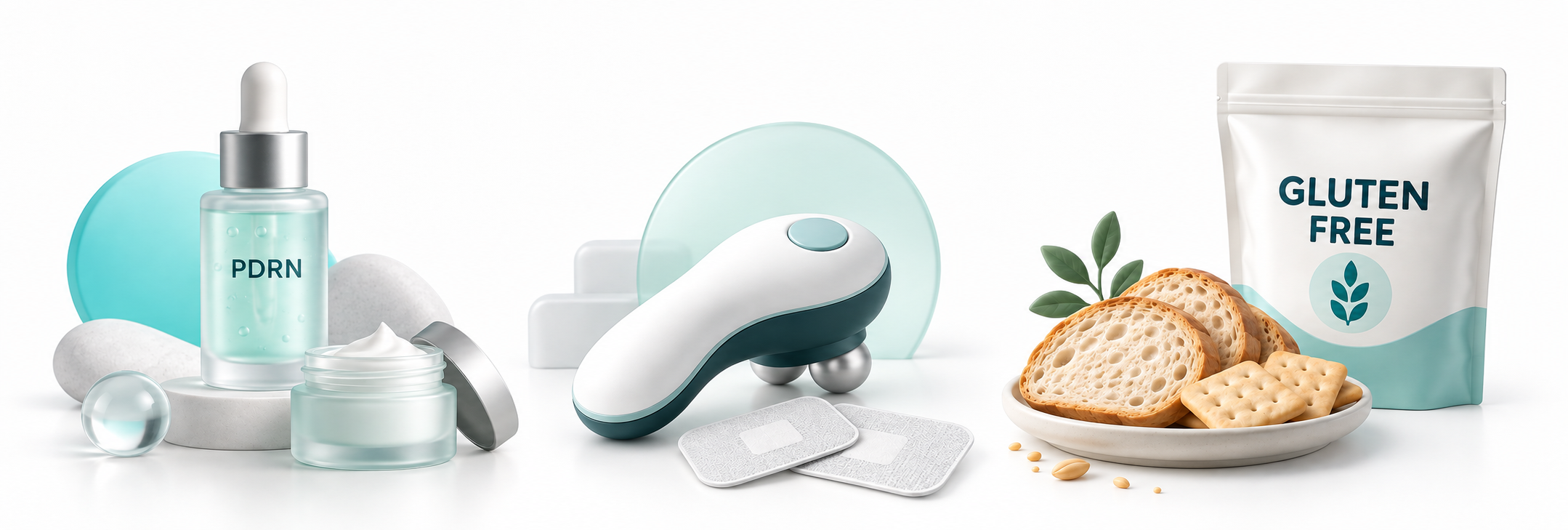
Be cautious of “skin regeneration” claims in PDRN cosmetics
The Ministry of Food and Drug Safety (MFDS) inspected cosmetics containing PDRN and other ingredients, uncovering 63 cases of misleading advertising. Typical examples include expressions like “skin regeneration” and “anti-inflammatory,” which could be mistaken for medicinal efficacy. Please verify that descriptions of ingredients do not imply medical efficacy and that functional claims align with the scope of your review and reporting.
Massagers and Patches: Check Product Classification Before Advertising “Pain Relief”
The Ministry of Food and Drug Safety (MFDS) has identified 58 cases where massagers and patches—which are general consumer goods—were advertised as if they were medical devices. Do not promote pain relief or disease treatment effects for products that are not medical devices, and even for medical devices, please describe their benefits only within the scope of their approved, certified, or registered intended uses.
“Gluten-Free” Does Not Implie Digestive or Weight-Loss Benefits
The Ministry of Food and Drug Safety (MFDS) has uncovered 20 cases of misleading online advertisements for gluten-free products. Typical examples include claims such as “aids digestion” or “weight loss.” Please verify the requirements for gluten-free labeling and take care not to link this designation to benefits such as improved digestion or weight loss.
Here are the cases the Trust Team reviewed and addressed this week.
[Case 1] “Consulted with and endorsed by a doctor” — Use of prohibited phrases in cosmetics labeling and advertising
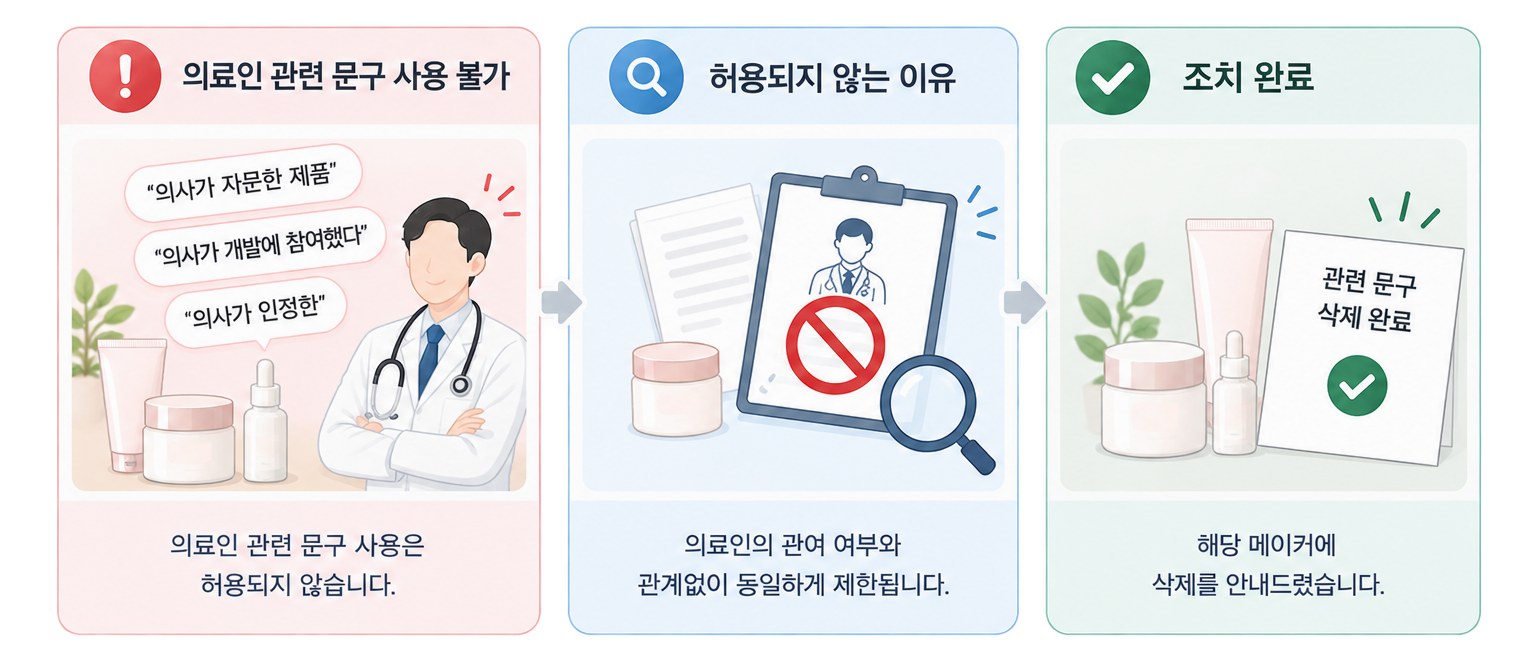
In the beauty category project, we found that Rewards were being promoted using phrases such as “product advised by a doctor” or “developed with a doctor’s participation.” Under the Cosmetics Act, citing the involvement of medical professionals in labeling or advertising is restricted—regardless of whether actual consultation or development participation occurred. This is because consumers may mistakenly believe the cosmetics have been verified by medical experts and place excessive trust in them. wadiz continuously monitors such cases and has instructed the relevant makers to remove these phrases.
💡 Why shouldn’t the phrase “advised or endorsed by a doctor” be used?
Pursuant to Item 2(a) of [Appendix 5] of the Enforcement Rules of the Cosmetics Act, any labeling or advertising that states or implies that a physician, dentist, Korean medicine doctor, pharmacist, Korean medicine pharmacist, medical institution, research institute, university, or similar entity has recommended, designated, certified, endorsed, advised on, or is using the product is prohibited. This prohibition applies even if the statement is factually accurate; however, in the case of universities and research institutions, references to factual academic or experimental research data or citations from academic papers are exceptionally permitted.
[Case 2] “Isn’t this a trademark infringement?” — Review of a Report on Similar Trademark Names
A trademark infringement report was filed against a heating appliance Rewards project by the owner of another brand with a similar name. While both trademarks list heating appliances as designated goods and may appear similar at first glance, trademark infringement must be determined by comprehensively evaluating factors such as whether the trademark is registered and whether the designated goods match, not just the similarity of the names. After the Trust Team verified the trademark registration status and related documents, it was determined that the two trademarks were separate, legally registered rights. wadiz informed the complainant of this, and the Rewards campaign proceeded as planned.

💡 Does a similar trademark name automatically constitute infringement?
No. Whether trademark infringement has occurred cannot be determined based solely on the similarity of the names; a comprehensive review is required, including the designated goods (whether they are of the same type), registration status, and the actual composition of the marks. When a report is received, wadiz directly verifies the trademark registration status of both parties to make a well-founded determination as to whether there is an actual conflict of rights.
We’ll highlight the key points of this week’s issues.
This week, we examined cosmetic labeling and advertising standards, trademark infringement reports, and examples of unfair advertising identified by the Ministry of Food and Drug Safety. Even if a medical professional provided consultation or participated in the development, expressions that imply a recommendation, endorsement, or consultation by a physician, dentist, Korean medicine doctor, pharmacist, or medical institution—as defined by the Cosmetics Act—cannot be used, regardless of their factual accuracy. Makers currently preparing related Rewards are strongly advised to take this into consideration.
Furthermore, even if a report is filed regarding similar trademark names, wadiz does not impose sanctions immediately; instead, we directly verify the designated goods and registration status to make a well-founded determination as to whether there is an actual conflict of rights.
The next transparency report will be released on October 12, 2026.
The Trust Team will continue to communicate transparently and build an environment where both makers and supporters can feel at ease.
The Trust Team will continue to communicate transparently and build an environment where both makers and supporters can feel at ease.

 Kakao Channel
 Facebook
 Brunch
 Instagram
 Blog
Blog YouTube
 X
X 링크드인
링크드인 Android App
 iOS App
